Showing posts with label sustainable living. Show all posts

Sustainability 2 - On becoming a Grocer

little hadham stores

I am working on a new website and as a result have to work on an "About Me" section. On the one hand, I find this difficult. Just as I find the photoshoot I needed to do DIFFICULT, despite the best efforts of the lovely Natalie Aubry.

On the other hand, it is a great exercise in thinking about, and defining once again, what I really want to do with this business/STORES/my life...

I never intended to be a shop keeper, but I believe strongly that we need to make conscious, sustainable, choices about how we consume.  I believe that food is a great way for people to start to think about many of today's environmental issues on a personal level. And, that it is easy to feel overwhelmed by the, often conflicting, environmental advice.

little hadham stores village grocers

I try to look at things holistically, aiming to tread as lightly on the planet as possible, without compromising quality, or beauty, or the need for us to share our creativity and knowledge with the widest community we can. When I choose goods and suppliers I always work to the simple principle:

"BUY LESS, CHOOSE WELL"


Anything else is an attempt to cut corners and it will end up biting you on the butt in the long run. It seems to me that one of the biggest problems with the food industry is that in it's continued attempts to create cheap food it has created the problems of industrialised agriculture. The constant downward pressure on price is what leads to; inhumane farming practices, lack of respect for animals, land and consumers, toxic chemicals being used on the soil, a disconnect from the earth itself. And we, the consumer, are often complicit in this.

I try to bring my customers the freshest food available, with a minimum of food miles and food waste. I support local, like-minded, business, small producers who make an ethical choice about how goods should be produced, sold, packaged and consumed. Not only is this great for our community, but we all get to eat seasonally and sustainably.

I also want to choose from artisan makers and the best quality producers worldwide, to support traditional, sustainable production practices and nutritionally valuable and great tasting food.

dog at shop door

SUSTAINABILITY IS AT OUR VERY CORE : -

  • Organic first is our motto; and reducing the toxicity of my environment, and the food I eat, is a life long journey. We supply weekly organic veg boxes, organic artisan bread, organic whole foods from our zero waste shelves (anything NOT organic is listed as such).

  • Reducing consumption is an aim in itself, but specifically of animal products is environmentally important. We stock vegetarian and vegan alternatives as the norm, rather than the alternative. However, I believe in nose to tail eating and believe the emphasis should be on making sure there are high welfare levels and no waste when we do consume other animals.

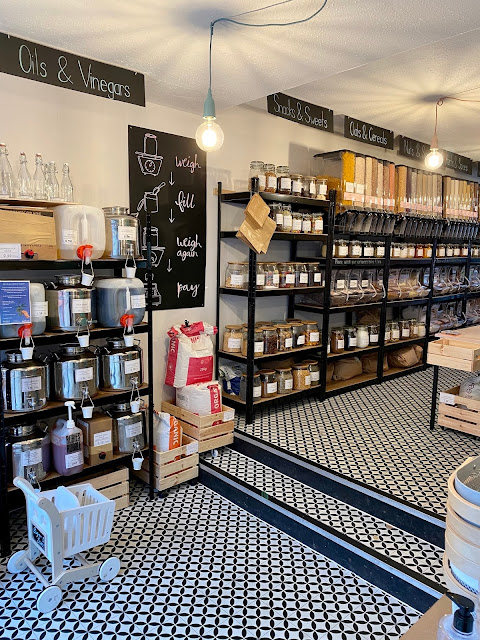
  • Minimise packaging. It should be compostable, recyclable or re-useable. Bring your own bags, boxes, tubs, jars, any container and we'll fill them from our shelves. Return your veg boxes, egg cartons, glass and plastic containers and paper bags and we will re-use them or compost them.

  • Cut single use plastics. Plastic is an amazing product in some circumstances but OUR use of it is killing the planet, and WE can do something about that. It’s not that we never use plastic, but we believe we can re-duce, re-use & re-cycle the minimal amount that we do use.

  • Sustainable palm oil - the West's rampant consumption of this is what drives countries to destroy their rain forests, yet like any other crop it can be sustainably grown.

  • I believe in a co-operative approach and work WITH my local suppliers. My main wholesaler is the UK’s biggest worker’s co-operative; who have been supplying natural, responsibly-sourced products since 1977. They have ethical policies on the environment, trade, palm oil, workers rights, animal welfare, toxic ingredients, and regularly review their supply chain.


It has been an iterative process, finding my way to define this approach. And it will continue to develop.

Despite my local prejudice, I find myself wanting to stock my favourite foods from overseas. I have been brought up eating West Indian food, I can't suddenly turn off that need for spice and sunshine. I am starting to stock more lifestyle products, natural materials, traditionally made, often vintage and I'm not sure if this is pushing me away from the original plan for the shop.

Anyway, I had to fill in the census form last weekend and I am now officially a grocer, so there I am. Come on in, I love to talk!


0

Sustainability 1 - Zero Waste Shops

sugar and scoop

As I am sure you know sustainability is hugely important to me.  The Christmas break and new year always gives me the opportunity, and head space, to think about what sustainability really means and what my goals for the new year are.  Looking back at my blog I find this post from the beginning of last year; A New Year but No New Planet. I found myself liking this quote:

I think a good start is to focus on the many, small changes that are compatible, and therefore sustainable, in our own lives.  It is all about our individual priorities and making active choices, even if the science tells us next year they were wrong.  Conscious choices lead to meaningful action.

It made me realise I wanted to do a series of posts on other people's thoughts on sustainability and maybe introduce you to some local, ethical and sustainable businesses.  So, I am starting with Sugar and Scoop a zero waste shop in Ware.  

Reducing plastic waste is crucial to the future of our planet. That’s why Sugar and Scoop sell fantastic, high-quality products that help you to cut down on the single-use plastics you get through in daily life.

Kirsty Taylor-Moran set up Sugar and Scoop with a crowd funding campaign, gaining support of her future customers in Ware to help establish the business.  I asked her to tell me more:

We were motivated to set up Sugar & Scoop after becoming increasingly concerned about climate change and the government inaction. We realised recycling, where possible, was not enough and started to make meaningful changes at home to reduce our impact on the environment. 

Food packaging, cleaning, toiletries and baby hygiene products were obvious areas for us to target. We were trying to do our best to reduce our single use plastic waste but found it really wasn’t very easy for us to do without travelling miles, at the time our nearest ZW store was in St Albans and was logistically difficult for us. 


zero waste shop


Kirsty's shop is beautiful and she believes that reducing your plastic waste shouldn’t mean compromising on choice or quality.  Kirsty seeks out the best quality plastic-free products so that you can buy them locally.  If there’s something new you’d like to see in her store, just let her know and she'll try to source it.

Sugar and Scoop offers refills of food, toiletries and cleaning supplies along with treats like her nut-butter station.  Kirsty says:

We feel very strongly that everybody should have a refill shop in their town and we wanted to help others in our local community reduce their household waste too but with a real focus on convenience, accessibility and offering a broad enough range of products to make it feasible to skip the big supermarket shops.

sugar and scoop


Sugar & Scoop 
Zero Waste Refill & Eco Lifestyle Shop
76 - 78 High Street,
Ware, SG12 9AT

Email - Hello@sugarandscoop.com
Instagram - @sugarandscoop


0

Meet the Makers - Part One


At Little Hadham Stores I work with some wonderful suppliers.  I simply refer to them by their first names in the order email that goes out every week.  So, as we have many new customers I thought I should take the time to introduce them. 


Paola makes our Italian meals and is an amazing cook.  I do not know how she puts exactly the same ingredients into her sugo (passata) as me and yet hers tastes so much more complex.  I love Italian food; I lived in Bologna for 6 months, travelled throughout the country and have close friends that I have visited regularly in Florence, Venice and Sardinia.  Paola's food is still some of the best I have ever tasted.  And my children are massive fans of her cooking, I quote; "...anything Paola makes will be perfect" (Louis, aged 11) 


Paola grew up cooking with her Nonna (grandma), mother & aunts.  She loves the very simple thing of ingredients turning into something that is delicious. Very interested in regional Italian cooking, Paola has travelled extensively in Italy, trying all the regional foods, Emilia Romangna is one of her favourites.  Poala's Nonna was from Venafro a beautiful little town in between Rome & Naples.  On her paternal side she is Pugliese.  She hopes to gather her knowledge and pass it on to her customers with her cooking.  She is increasingly becoming more adventurous in her handmade pastas stuffed or otherwise! 


Fiona I secretly think is a magician. For me it all started with her soda bread, but Fiona's cooking is an adventure with seasonal, foraged and forgotten ingredients.  My weakness is the food of my childhood, I love sweet potatoes and coconut and Fiona can make them into muffins and macaroons to die for.  I had the absolute pleasure of going on my first fermentation course with Fiona and I love her kimchi and krauts. In fact if you tell me Fiona has made it I will eat it.


Her ingredients are always certified organic and she sources what is available in the UK & locally as a rule. The traceability of ingredients is hugely important to Fiona.


Fiona also forages in Bishop’s Stortford in order to appreciate nature’s pantry and the changing seasons. This also adds flavour & important nutrients to her selection of products so they can be at their best.
slow food uk
https://www.slowfood.org.uk/

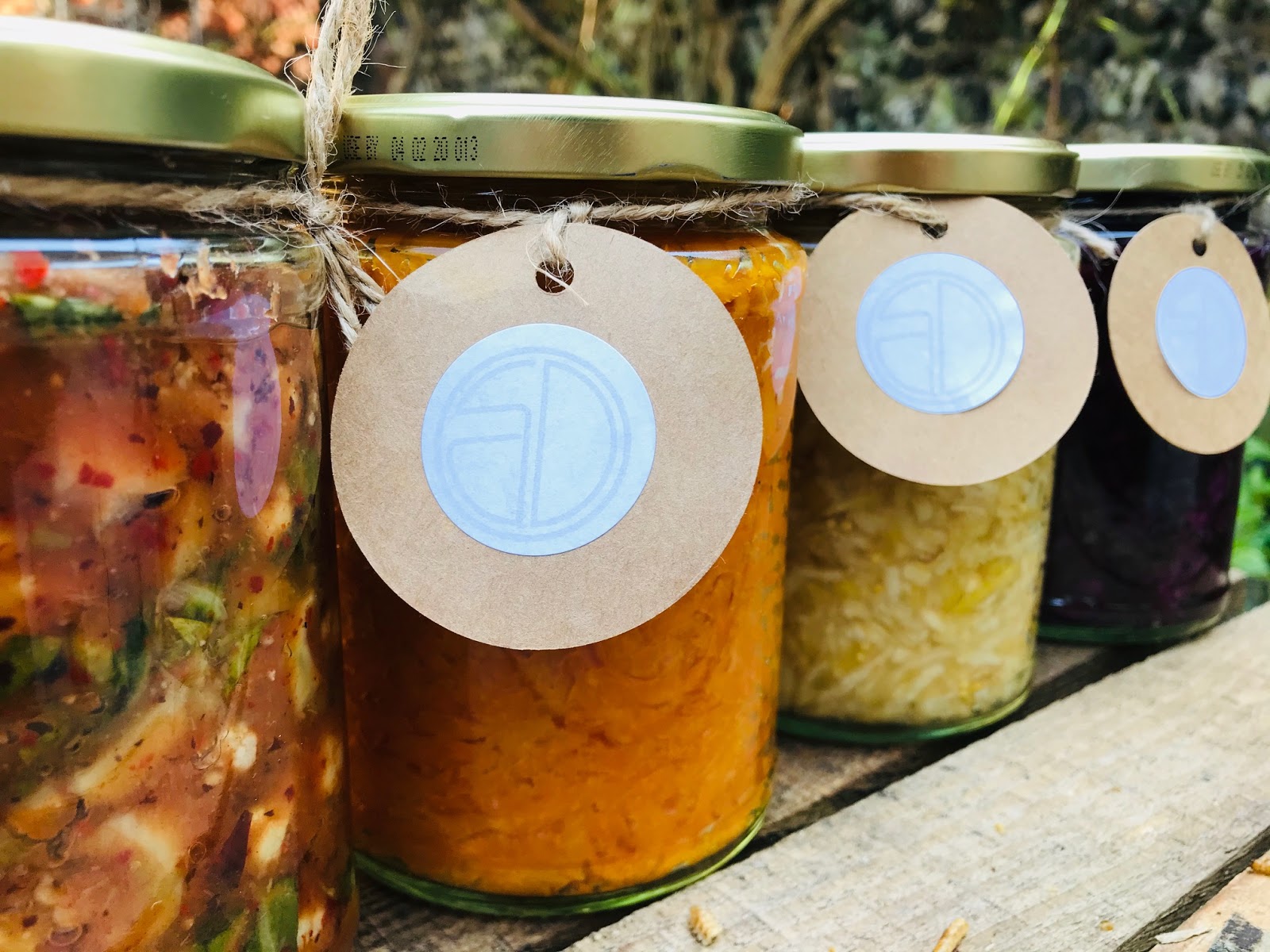
Fiona is a member of the slow food movement, & believes in the sustainable food system and local food economy which they support; she wears her snail with pride.


Part of Fiona's interest in slow food is the cultivation of wild bacteria, to transform raw ingredients into products far more complex, flavourful and digestible to us, which give us the all important healthy gut we need right now to boost our immune system.
0

Ugly Veggies and Seasonal Eating

The Parsnip Baby
Along with environmental impacts on food production; organic verses intensive farming techniques and packaging for example, I am also very conscious of food miles and food waste.  I believe that seasonality is the key to mitigating many of these issues.  So, please understand that when I describe our veg boxes as fresh, local and seasonal this is not marketing speak.  

I work with a very committed and hard working farmer who believes in organic production and sustainable agriculture systems whole heartedly.  He leases his land in Sawbridgeworth and Stanstead Abbotts, which he has had organically certified, or is in conversion.  He lives and grows on the land and sells his produce to an organic wholesaler in Cambridge, COFCO.  Where he uses the produce from his and other organic farms, mostly in Hertfordshire, Cambridgeshire, Kent and Suffolk, for our veg boxes.  COFCO do also import organic produce, mostly crops that do not grow in the UK climate, ie lemons, ginger and tumeric.  A lot of the fruit in the boxes right now is from overseas.  Because we do not have fruit in season in the UK in April.

We are entering what used to be called the hungry gap. (A great description on the Riverford blog).  Our latitude and temperate climate puts us in this position in April, May & Early June.  It is when we are coming to the end of our winter stored veg, the over wintering crops are starting to bolt as the weather warms up, making them woody and inedible, and new spring crops are not yet ready to harvest.  


We now import produce to cover this period in the UK, and we also grow things under cover - but this can have real negative impacts on the environment.  (There is a great local exception to this; Guy & Wright Tomato Farm )  I'm not suggesting that this should change, I don't want people to starve.  But we are also, at times, unnecessarily picky about what our fruit and veg looks like and how it arrives with us, and this creates waste.  I'd suggest if we were a bit more tolerant, so that producers did not throw away these blemished or misshapen veg, we might need to import less.  Our veg boxes are therefore tolerant of "ugly veg".  It's no less fresh than the same washed British produce you buy in the supermarket, or even some of the imported "fresh" veg that may have taken weeks to get here from the other side of the world.

My bedtime reading at the moment is Mike Berners-Lee's How Bad are Bananas? - The Carbon Footprint of Everything (Bananas - not quite as bad as you might imagine actually, which is great cos I love bananas!)  A carrot's carbon footprint is about 2g of C02e (carbon dioxide equivalent) per calorie, carrots and other root veg are some of the most climate friendly foods available - and healthy too.  If you buy 1 kg of carrots you are looking at; 
0.25kg CO2e, local in season veg
0.3kg Co2e, on average
1kg co2e shipped baby carrots

I get one of our regular organic veg boxes most weeks.   Right now they are full of root vegetables.  These have been lifted (taken out of the soil) before Christmas and stored.  Studies comparing conventionally grown versus organic carrots show evidence for greater nutrient richness.  Levels or carotenoids, phenols and vitamin c were compared, with greater amounts observed in all three categories in the organic carrots.

organic veg box

If you spotted those plastic bags in the picture this is because of my issues around food waste.  The soft leaves of salad crops like rocket, winter purslane and spinach do not tolerate even the relatively short distances that they are transported to us.  The amount of food waste is not only shocking in itself, but you have to take into account the energy the organic farmer has put into growing the crop, water use and even the petrol/diesel used by farm machinery.  There is sometimes a genuine need for plastic bags and these ones can and should be reused. (Not only that, there is some debate on the carbon foot print of paper v. plastic bags.)

Anyway, back to our root veg:  Carrots and potatoes after harvest are stored still covered in mud in the dark.  You will not find UK grown carrots and potatoes in the ground at this time of year.  They are lifted because they are not frost resistant.  Our ancestors, or those of  us with veg gardens or allotments, will be eating the last of these stored winter potatoes now.   This is almost as fresh as your British Potatoes will be in April.  Jersey Royal potatoes, which now have a protected designated of origin, are the UK exception.  Available from around now, they are usually the first "fresh" new potatoes to come into the shops in the UK.  Possible only because of Jersey's more southern latitude and their development of the International kidney potato.

So, if you find blemishes in your veg box potatoes, cut them out, you only need to cut a small area around the blemish. You only need to be concerned if the skin is green. This is chlorophyll pigmentation, not in itself harmful but a sign that there is the toxin solaine in your spud. That said, toxic levels of solanine are 100th of an ounce for a 200 lb person, which translates to that person eating 20 lbs. of whole potatoes in a day! I mention whole potatoes, as the green skin on a potato is the area with the highest concentration of solanine and thus, the most toxic.

willow fencing garden

I'm getting my veg patches ready for a new year of growing and I also hope to have some herb and veg seedlings available to buy in LHStores.  I'd really recommend you try growing your own and enjoying not only the process of gardening but also preparing and eating your own produce.
0

The Roots of LHStores


Traditional rural grocers

We have a lot of new customers and it has made me really aware that maybe not everyone really knows what we are about.  So...


Little Hadham Stores is a tiny shop in rural Herts, we have been open since May 2018, (2 days a week since last September), our fresh food is all seasonal, local and cooked, baked, and delivered on a Thursday, to order.  We have mostly organic dried goods available to weigh and take away in customers’ own containers, artisan crafts and environmentally friendly body, lifestyle and household products.

When my husband and I bought our house in Little Hadham, it was mostly for the big, wild, over grown back garden.  The attached Victorian butcher’s shop was in a pretty poor state.  After much work (it has been a store room, our children's playroom and our kitchen) the shop has finally been returned to its’ original purpose, a traditional village store, selling fresh, local, seasonal food.

chez panisse inspiration

I lived for 8 years in the San Francisco Bay Area and volunteered with friends on amazing edible school yard and permaculture projects in Northern California.  Upon returning home to the UK, in 2000, I found the lack of environmental awareness amongst my friends and family amazing.  But, I think, like many people, it was having my first child (Una) that really opened my eyes to the toxicity of the environment that we are creating on our beautiful planet.  

organic lunch

I very much believe in sustainability as the key to solving so many problems.  As such, my business's sustainable ethos is based on the carefully curated and tested products we stock, it's support of small, local, ethical, businesses and in its’ evolution.  My business has to be sustainable too.  It has to fit into my family’s life and be a warm and welcoming place for my community, it’s growth can be as slow as it likes, as long as it is going in the right direction.

farmers market business cards

When I first moved from East London to Hertfordshire I assumed I would be connected into a wonderful network of local food growers and producers.  It’s the countryside right?  It’s where the food comes from.  But I actually found it quite hard to find good quality, ethically produced food.  In 2017 I took over the running of Little Hadham’s monthly farmers’ market.  Already a great way to reduce your food miles, I banned plastic bags and have been trying to improve it’s eco credentials ever since.  

veg outside grocers

In the process of trying to increase numbers at the farmers’ market, I surveyed our regulars and asked them what they would like to see more of.  The most typical response was simply; more market.  For the stallholders that attend the farmers’ market this wasn’t possible.  And so Little Hadham Stores was born in a very organic way; in an attempt to offer customers access to some of the market’s produce during the rest of the month.

organic veg box

But I also support an organic smaller holder based in Sawbridgeworth, not just by stocking their veg boxes, but also giving my time to help with their online presence and promotion.  Little Hadham Stores regularly changing, fresh, seasonal food includes foraged ingredients and tries to highlight great under-rated British crops; like winter purslane and medlars.   We sell beautiful British cut flowers from a local grower in her first year of business, another mum inspired to find work that fits with her children.


organic free range eggs

I like to think that when you come into Stores, you’re being welcomed into my home.  The eggs in the shop are from my own hens, herbs and some veggies, from my garden, beeswax products from my bees.  I know the story of and I’m passionate about everything in my shop, from the bread to the gluten free pasta, the rapeseed oil to the tinned tomatoes, everything has been chosen carefully by me. 
mutti tomatoes

But Stores has evolved so much since we opened, and we offer more than just food.   We have regular evening events, including talks, craft workshops and Supper Clubs.  Little Hadham Stores is all about a community of makers and growers supporting each other.  And trying to offer their community another way of consuming that is gentler on the planet.  The fact that Stores is also my home I think makes it all the more special, as we are literally welcoming our community in.


dogs outside vintage  grocers

0

Cleaning Without Chemicals - 10 Uses For Vinegar Around The Home


I am a fan of vinegar.  There I’ve said it, and you can mock me, but I am.  In cooking I use it a lot, from dressings and pickles, to a spoonful of organic apple cider vinegar in water daily as a tonic.  And as a cleaning staple it is second to none.  I’m continuing my efforts to banish plastics and ban all but natural cleaners, from my home this year.  I know vinegar will be an essential ingredient in my quest.

From windows to scummy shower heads, vinegar is a versatile and environmentally safe alternative to manufactured cleaners, and is inexpensive too.  When combined with the our Dr Bronner’s Castile Soap it is a veritable cleaning wonder.  Although never mix the 2 directly as the vinegar (acidic) and castile soap (base) cancel each other out. 

For the tips on using vinegar in the home below you will want to use, distilled white vinegar and you’ll probably want to stock up on litres of the stuff, so look no further than STORES.  Here are 10 traditional uses for vinegar that your granny, and probably her's, used:

1.  Windows
Mix equal parts water and vinegar in a spray bottle and apply to your windows, mirrors etc.  Wipe with a clean cloth, chamois leather, or newspaper is a great lint free cloth for the final polish.  If you are doing the outsides of windows you can add a 

2.  Refrigerators
You can use the same solution (equal parts water and vinegar) to clean the inside of your fridge without worrying that you are spraying chemicals all over your food.

3.  Rinsing Fresh Produce
In our house, both store bought and fresh from the garden produce gets rinsed in the sink with a glug of vinegar.  Salad in particular benefits from a rinse in vinegar water, before I stick it in the salad spinner and whizz it.

4.  Fresh Cut Flowers
To keep fresh flowers for longer add 2 tablespoons of vinegar and 2 teaspoons of sugar to the flower stems, and refuse those little plastic sachets at the shop.

5.  Limescale
Taps - Soak a towelling rag in vinegar, wrap it round the tap and leave it for about 30 mins to an hour.  Use the same rag to rinse the vinegar and limescale build up off.
Shower heads - soak for several hours in a bowl of one part vinegar to three parts water.  Or if you can’t get the head off, use a plastic bag (yes I know, but re-use one!) with the solution tie it onto the show-head over night.
Showers - To prevent soap scum build up wipe ceramic tile, glass shower screens or doors with a rag or sponge soaked in vinegar.
To be honest the limescale removal bit of this list could become a list of its’ own.  You can use vinegar on limescale stains in the loo, to unclog steam irons and for bath scum too.

6. Drains
I put a cup of vinegar down the kitchen and bathroom drains to clean and deodorise, then flush with running water.  A mixture of bicarbonate of soda and vinegar does the job even more thoroughly. Two tablespoons of bicarb, followed by a half a cup of vinegar and left for 30 minutes before running the cold tap to flush it through.

7. Wooden chopping boards
Wipe down with a vinegar soaked cloth, this removes odours and has a disinfecting properties, without adding chemicals to the food you chop on your board.

8. Boiling an Egg
If the shell cracks add vinegar to the water to stop the white escaping.  Ok, not actually cleaning but my granny taught me this one.

9. Dishwasher Rinse
Add 1 1/2 to 2 cups of vinegar to the bottom of the dishwasher.  Wash on your regular cycle using your usual detergent and look at the sparkling results. 

10.  Washing 
So vinegar helps to break up uric acid (that lovely yellow staining on white cotton!) and soapy residues in your wash.  Adding a cup of vinegar to the rinse cycle should do the trick.

I am still experimenting a bit with washing my clothes chemical free.  I have to admit I am a Fairy Non-Bio powder girl (At least it is in a cardboard box!) I’ve tried a couple of environmental friendly brands, had a brief flirt with soap nuts and been put off silver balls by a scientist friend who says they are toxic to water life.  

I live in a very hard water area, so I’ve started to add vinegar to my wash and will test out the eco friendly brands (including Dr Bronner) again with vinegar when this lot of Fairy runs out.  So, watch this space for an update.

Otherwise I’ve regularly tried all of the above.  I’ve also seen recommendations for using vinegar to clean stains on carpets and soft furnishings, kill grass, clean microwaves, as a hair rinse, on copper, brass and pewter, to clean automatic coffee machines, to soften paint brushes, remove deodorant and antiperspirant stains on clothes, the list seems endless. 

0

Wake Up to Organic - Date & Apricot Oatmeal Cups


wake up to organicwake up to organic

We're celebrating breakfasts, and more specifically organic breakfasts, this week in Little Hadham Stores.  We are taking part in the Organic Trade Board's national campaign Wake Up To Organic to  encourage our friends and customers to switch to an organic breakfast, as a first step to eating more sustainably.

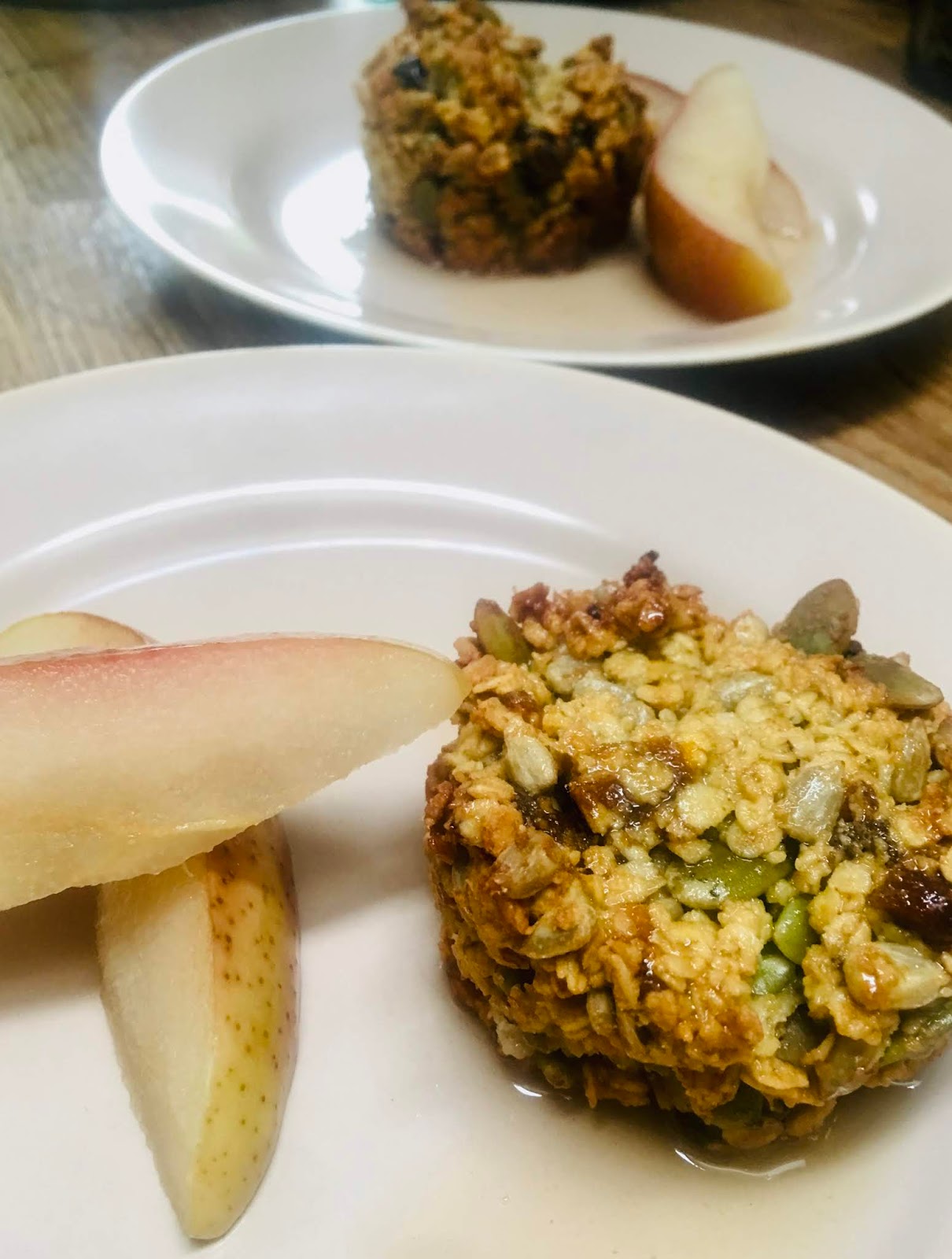
Tomorrow, in Stores we'll be giving away Wake Up to Organic's Little Book of Breakfast Recipes, so I thought I should try at least one of the recipes out on the kids.  This morning we had date & apricot oatmeal cups with poached pears for breakfast.

WakeUpToOrganic

Sweetened with dates, apricots and maple syrup, these oatmeal cups make a tasty summer alternative to porridge.  We eat a lot of porridge in the winter, but tend to switch to muesli or granola, with fruit or yoghurt, in the summer.

I love oats as a breakfast ingredient; they are an incredibly nutritious, gluten-free wholegrain, rich in antioxidants; contain a soluble fibre that we believe helps reduce cholesterol, improves blood sugar control and helps the growth of diverse bacteria in the digestive tract.

WakeUpToOrganic

These oatmeal cups were a great, nutritionally dense, breakfast; full of wholegrain, seeds, fresh and dried fruit.  They can be made vegan and dairy free, there is only a small amount of flour, which you could probably just omit with no negative effects to the recipe.

They were delicious, the kids definitely preferred to have them with fresh fruit on the side. But considering how often my daughter runs out to catch the bus in the morning with an unfinished breakfast on the table (she is the world's slowest eater) they're a perfect "to-go" food too.  

To get this recipe and others put together especially for Wake Up to Organic, pop into Little Hadham Stores tomorrow 8am - 2.30pm.  We've also got organic mini breakfast and delicious organic foods to buy and try, lets start the day the organic way!

#WakeUpToOrganic


0
#WakeUpToOrganic


All around the country on the 12th June independent shops and cafes will be dishing up free organic mini breakfasts as part of their Wake Up To Organic events. The aim is to show how easy it is to switch to an organic breakfast, and to showcase the fabulous range of organic food and drink that your local independent stores and cafés offer.

Little Hadham Stores is taking part, (we're the only shop in the area doing so) we'll be open on Wednesday 12th June from 8am with FREE mini breakfasts and a build your own bircher bar, organic coffee and croissants to buy, samples of our wonderful organic fruit and veg boxes, and much more, so pop in and find out more about us and what we do at Little Hadham Stores. 


#WakeUpToOrganic


We also have a great competition to win an Organic Breakfast Box.
To win all you have to do is be on our mailing list by 12th June or come into the shop and sign in on 12th June, we'll be open from 8.00am - 2.30pm.  The winner will be drawn at the end of the day, and must be able to come into the shop and pick up their prize.


#WakeUpToOrganic

Not everything we sell at Little Hadham Stores is certified organic, but we always take the utmost care in our choice of producer.  I blogged about our commitment to organics and four great reasons for choosing our organic fruit & veg boxes here.

They often say that breakfast is the most important meal of the day, so make it organic! 


0

Four Reasons to Order Our Organic Fruit & Vegetable Boxes


organic veg boxes

Little Hadham Stores' organic fruit & veg boxes are a great deal at £12.45.  The other day I went into Waitrose and bought an equivalent amount of organic veg as is in one of our boxes and spent considerably more.  And it goes without saying that our fruit and veg is likely to be more local and fresher.

organic tomatoes
Organic tomatoes of every colour
Making small healthy changes in your life is much easier to maintain than a huge lifestyle change. A veg box is just such a small change which could make a big difference to your eating habits, health and overall lifestyle.  Here are my top four reasons why they are a 
great idea:

Fresh rhubarb, straight from the field

1. Fruit and veg will taste better.
Really, until you have tasted a cucumber straight from your garden, allotment or a local farm, you have not tasted a cucumber.  Veg box tomatoes, asparagus, even the humble pea will awaken your tastebuds and will inspire you to eat better quality produce as a result. 
Because they are not being picked before their prime to be transported hundreds of miles, the fruit veg in your box will be the freshest, crunchiest, and most flavoursome you have ever tasted. 

quince
Quince a great British seasonal delicacy


2.  You will eat with, and so appreciate, the seasonality of food.


It's too easy to get anything you want from the supermarket at any time of the year.  But you are increasing the food miles of your meal, which is bad for the environment, but also not great for you.  By eating with the seasons you are likely to get fresher food, picked at it's peak and tastier.  Importantly it will be more nutritional because it's had more exposure to the sun and the elements and will have increased levels of antioxidants.

The season’s bounty will also expose you to a wider range of vegetables. You’ll broaden your horizons (which have most likely been drilled into you by your upbringing and culture) from carrots and potatoes to whatever’s available that month, asparagus, butternut squash, broad beans, Jerusalem artichokes, quince...
asparagus
Another British seasonal hero, asparagus
3. You will be supporting your neighbours
Our veg boxes are run by Stort Valley Organics, based on an organic smallholding in Sawbridgeworth.  The boxes are supplemented by fruits and vegetables from The Cambridge Organic Food Company (COFCO).  COFCO collect produce from lots of organic farms in and around Cambridgshire. And some things from further afield, such as lemons, or ginger.  They are organically certified, which means they have an annual inspections to prove that all their fresh produce is organic.

4.  And finally our veg boxes are good for the environment. 
Organic production is good for the environment – both for the wildlife in and around the fields in which the food is grown, and for the planet as a whole. 

Organic production is good for your health reducing the environmental toxins that we all ingest along with our food when grown conventionally.
By prioritising local produce, we keep food miles to a minimum, helping to minimise carbon emissions.


We think about packaging, minimise the use of plastics and save on packaging by packing our veg in the empty boxes which some of our wholesale veg comes in – and we hope to re-use the boxes as many times as we can, so please return them each week!


0
Back to Top