Showing posts with label books. Show all posts

Welcome 2021...


Like most of us I welcomed in the new year with particular enthusiasm.  I mean, what is there to say about the s*#t storm that was 2020.  So instead here are three, slightly disperate, things that make me hopeful for 2021:


I am not going to add to the many trillions of words already used to write about the chaos of last year, I don't think I have anything unique to say.  But I wanted to share a link to this article from the NY Times on Dr Ugur Sahin and Dr Özlem Türeci, the couple who founded BioNTech.  This is not a comment on the vaccine but on the scientists, about whom there is much that gives me hope.


christmas cake

I made my first Christmas Cake for at least 15 years this Christmas.  I bulk bought the organic ingredients from my wholesaler and split it with a group of friends and customers that were baking their own cakes too.  I will be more organised and hopefully there will be an even bigger group of us to share the cost and minimise the packaging this year.  I love this post from my old homeopath Caroline Gaskin where she explains why Christmas cake for brekkie is a GOOD THING!


Credit...


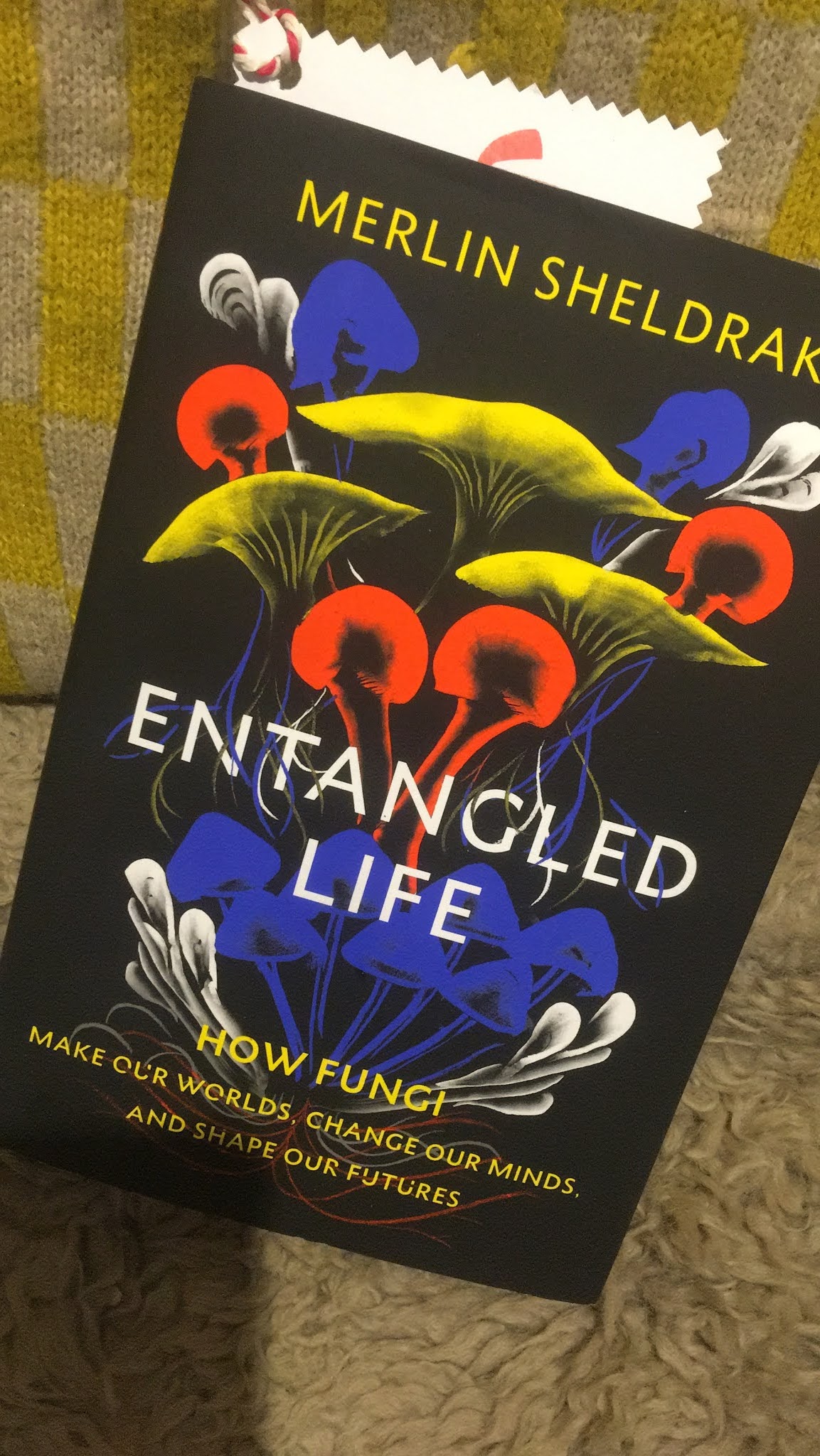
It may not seem likely that a book on fungi would be the best book I've read all year (I'm counting 2020 as the year not 2021!) but Entangled Life - How Fungi Make Our World, Change Our Minds and Shape Our Futures.* is just brilliant.  On almost every page there is something that I did not know and have to read out aloud to my family.  It's eloquently written, stunningly informative and it is truly making me think differently about everything from gardening, to evolution, to what it is to be an individual, and I am only on the Chapter 4. 

* This is an affiliate link to the Bookshop.org, an online bookshop with a mission to financially support local, independent bookshops, details of which are below.


Bookshop.org believe that bookshops are essential to a healthy culture. They’re where authors can connect with readers, where we discover new writers, where children get hooked on the thrill of reading that can last a lifetime. They’re also anchors for our high streets and communities.

As more and more people buy their books online, they wanted to create an easy, convenient way for you to get your books and support bookshops at the same time.

If you want to find a specific local bookshop to support, find them on their map and they’ll receive the full profit from your order. Otherwise, your order will contribute to an earnings pool that will be evenly distributed among independent bookshops.

They also support anyone who advocates for books through an affiliate programme, which pays a 10% commission on every sale, and gives a matching 10% to independent bookshops. If you are an author, a website or magazine, have a bookclub, an organisation that wants to recommend books, or even just a book-lover with an Instagram feed, you can sign up to be an affiliate, start your own shop, and be rewarded for your advocacy of books. Bookshop.org wants to give back to everyone who promotes books, authors, and independent bookshops!

By design, they give away over 75% of our profit margin to stores, publications, authors and others who make up the thriving, inspirational culture around books!

They hope that Bookshop.org can help strengthen the fragile ecosystem and margins around bookselling and keep local bookshops an integral part of our culture and communities.

Bookshop is a B-Corp - a corporation dedicated to the public good.

0

The Most Beautiful Colouring Book Ever and Drawing with Sachiko Umoto


I picked up these books at Foyles on the South Bank about 12 months ago now.  They were supposed to be for Little Una Fox, but I love them and have probably spent as much time as she has at Sachiko Umoto's illustration school drawing cute animals, and plants and small creatures.

So simple and charming, the illustrations and instructions are easy to follow and the result is a very relaxing passing of the time.


As much fun, and possibly even more relaxing, as drawing is simply colouring in.  And the most beautiful colouring book ever surely has to be The Secret Garden by Johanna Basford.


Johanna Basford's beautifully intricate drawings are created first by hand before being digitised, each colouring book can take around a year to create.

 Illustrator Johanna Basford with her Amazon bestselling colouring book, Secret Garden. Photograph: Johanna Basford and Lawrence King
Una has both The Secret Garden and The Enchanted Forest, they can keep her occupied for hours and I have to admit to stealing them for a little go myself.  They are so beautiful and quite addictive.

Follow on Bloglovin
0

Reading List Two


This is a great book for anyone new to keeping chickens.  It orders the information well and is concise enough not to overwhelm, I like the way Mark Diacono writes.  I also love the pictures I will admit and this series of handbooks is becoming something I lust after.  Our chicks; Agatha, Astrid, Ashleigh and Anoushka were born last Wednesday and will be with us on Thursday in time for Easter.  Little Louis Fox has been counting down the days.

Mr Maggs is not my favourite person at the moment.  It seems that, when it comes to the Aga, I always do the opposite to what I am supposed to do, according to him.  -SIGH!-  However it seems there is a lot I need to know so I will swallow my pride and get on and read it.

Allotment Month by Month by Allan Buckingham
This book was our absolute bible 5 years ago when Mr Fox and I got our allotment.  It is a clear, practical and concise reference guide to what needs to be done in the garden and when.  Ours is covered in mud, ripped and water damaged, but I will still refer to it to get my brain in gear as I begin the work on our veggie patch.

About 10 years ago Mr Fox and I went to Cornwall on holiday and visited the Eden Project, while we were there we went to see the Lost Gardens of Heligan.  I came away feeling they were more amazing than the Eden Project itself.  I bought this book in the book shop, there were about 10 other books I would have loved too.  The Heligan Vegetable Bible is a book I love to flick through and make lists of the heritage breeds of fruits and veggies it mentions.  Heligan is an inspirational garden, and this book captures the depth and breadth of the amazing Victorian Country House garden.

Fork to Fork by Monty and Sarah Don
Mr Fox bought this for me one Christmas around a decade ago.  I love it, I've read it from cover to cover.  It is a beautiful book and I find it an inspiration.

And in case you are interested here is my Reading List One post.


Follow on Bloglovin
0

Reading List One


A new reading list for the move:-

  1. The Story of Houses And Homes - A Ladybird Achievement Book   From my collection of vintage children's books, one for Ladybird Tuesday I think.
  2. The Hive by Bee Wilson   I am very much looking forward to reading this book.  I started to read it a year or two ago but didn't get very far (I blame the little foxes) so it has gone on my pile of books to read in preparation for our new home as I really would like to keep bees.
  3. 21st Century Smallholder by Paul Waddington   Neil bought me this book for my birthday before we moved from London to Hertfordshire.  I've be lusting after a big veg garden, bees and chickens for some time now.  I have to admit 21st Century Smallholder is more style over substance, but it is a beautifully designed book and it has been on my bedside table for about 6 years, keeping the dream alive.
  4. Charles Dowding's Veg Journal by Charles Dowding   I found this book via some great images on pinterest (I've been looking for garden inspiration) and a competition in the Country Smallholding magazine.  Charles Dowding is a proponent of no dig approach to vegetable gardening.  My attraction to the idea of growing abundant food crops without double digging the plots once or twice a year cannot be stressed enough. 
  5. The Great Indoors - Ben Highmore   Not even started this one yet, but the other Mrs Fox gave me it for my birthday this year, more inspiration.
  6. Cabbages & Roses Guide to Natural Housekeeping by Christina Strutt   I bought myself and the other Mrs Fox this book a couple of years ago.  I feel I can only dream of my house looking like the pictures in here.  But a girl can dream right!  I'd like to really try and reduce my use of chemicals in cleaning the house and am hoping the new house will be a new start.
Follow on Bloglovin
0

January's Crafty Box

http://www.mrsfoxs.com/shop/?wpsc-product=mrs-foxs-crafty-boxes-january-2014-pre-order

A felt fox bookmark is one of the crafts in January's Crafty Box, due to be sent out on Friday 17th.  This month's Crafty Box precedes some big changes to the way we will be doing our Crafty Box subscription service.  As such we have decided to include some of the great craft ideas that we have had over the last few months that just didn't quite fit into previous boxes.  Plenty to keep your children busy indoors when the rotten winter weather makes it hard to get outside and play.

This particular craft is also a precursor to a new thread on our blog, Vintage Children's Books.  Between us Mrs Foxes we have loads and have decided to share some of our favourites on our blog.

We've lots of changes planned for 2014 and all of them good.


0

Two Parties


Along with getting all our Christmas boxes out to our crafty subscribers Mrs Fox has also been busy with parties.  

We had a rock and roll baby shower to put together for three mavens of the media world.  


And a party for a nine year old who loves books.  Can you spot who here favourite author is?

Tableware

Peach lanterns

Invitation and breakfast kit

Midnight Feast Kit Party Bag


Bunting
Party Craft - Wooden Spoon Dolls

Pinata


Mrs Fox's can create a themed party box for any occasion.  Handmade and unique our party boxes are lovingly created and will arrive at your home by courier with everything you need to hold an inspired party.  Get in touch for details info@mrsfoxs.com. 
0

Ladybird Tuesday - Birds & How They Live

Only a day late!  This month the theme for Mrs Fox's Crafty Boxes is flying animals, so how could I not pick Birds & How They Live for this week's Ladybird Tuesday post.  This is one of the books from my childhood Ladybird collection.  Written by F E Newing, BSc and Richard Bowood and illustrated by Ronald Lampitt again this book was first published in 1966.


"Almost everyone has some interest in birds and bird life, and this is  book which will give pleasure and much fascinating information to readers of all ages.

With a simple and clear text and superb colour illustrations, it describes feathers and flight, beaks and bills, feet and legs, eyes and ears, nests, songs, food and defence against enemies, and rouses enthusiasm for further study."
And that last quote just about sums it up.  I'm not a 'twitcher' by any stretch of the imagination but I loved natural history as a child, wanted to grow up to be a vet for a long time, and this book was a fantastic way to learn about birds.


The inside cover, as with many of these natural history books, is illustrations with line drawings of bird's skeletons, feather and wing structure.


Starting with a page on the definition of a bird and their evolution, the book defines first feathers, then wings and tails and then flight.  


And this is what I love about Ladybird books.  As the books readers are children the explanation of how birds fly is in simple scientific terms, as follows;   
"...in level flight the flow of air over and under the wing surfaces, and the angle at which the wing is tilted, cause a lower pressure to exist above the wing than under it.  This gives what is 'lift', which balances the weight of the bird."
The explanation is clear, the language is precise and there has been no attempt to "dumb-down".  The child that reads this explanation of flight is expected to try and understand this level of language and scientific thought.  As a result he or she will come away with a clear understanding of flight, and how birds manage to defy gravity.


In Ronald Lampitt's illustrations there is great detail and information for the young ornithologist and for the young artist examples of skillfully drawn, beautiful images.  I remember drawing copies of the bird heads below as a child.


This book taught me so much and I am really happy to share it as part of the Ladybird Tuesday linky started on the Being Mrs C blog, take a look at her posts here.

The rest of Mrs Fox's Ladybird Tuesday posts are here and if you have a collection of Ladybird books, please do feel free to join in.
0

Ladybird Tuesday - Animals And How They Live

This week's Ladybird book, Animals and How They Live was bought for me by my brother and sister in law and my niece Sasha for my birthday this year.  They know about my obsession with Ladybird books.  As the title sugests this is another Ladybird Natural History Book, written by F E Newing, B.Sc. and Richard Bowood with illustrations by Ronald Lampitt.  This book is part of Ladybird's Series 651, published pre-1970's as the price on the cover is pre-decimal (2'6 NET in case you are interested).


"It is not just a book about animals, it is much more; it is the story told in simple language, of how animals live, and how they have evolved to suit their way of life.  It is, in fact, a book about the evolution of mammals."


On the front inside cover of the book is this great picture of animal skeletons.

The book begins; " Everything can be divided into 'animal, vegetable or mineral', as in the game.  The animal we mean is any creature which can move of it's own free will, including birds, fishes, reptiles and insects.  When we speak of animals in the ordinary way we really mean mammals, which are all the animals which produce their young complete, and nourish them in infancy on their mothers' milk,  This book is about those animals, the mammals."
The book then goes through the biology of mammals and through page titles like; Hooves and Paws, Claws and Teeth , Tusks and Horns, Eyes, Ears, Noses, Voices and Tails; explaining the process of evolution by natural selection.


There are the usual wonderful illustrations displaying the magnificent diversity of the animal kingdom.

The book ends with the typical human preoccupation of our own similarity, yet difference, to the rest of the animal kingdom.  Having explained what instinct and knowledge are and that animals operate mostly on instinct the author does recognise that some young animals are taught by their parents as children are;  "A mother bear teaches her cubs to stay with her, to remain quiet and to hunt, and if they are disobedient she picks them up and spanks them - hard." 
However, "The top order of the mammals is called the primates, and includes monkeys apes and Man.  These have the most highly developed hands which they use in varying degrees under the direction of the brain...  Intelligence depends on using the brain to think and reason, instead of relying only on natural instincts."
It's quite interesting that intelligence is being defined like this, as the co-ordination of brain and hand.  I think more modern books would probably place more emphasis on the brain and the animals ability to communicate.

In my collection of Ladybird books from childhood I have more of their Natural History series than any of their other non-fiction series.  The last Ladybird Tuesday I joined in with was a post on one of the other books in this series, Plants and How They Grow, and I think next week I will post on Birds and How They Live.

This post is part of the Ladybird Tuesday linky started on the Being Mrs C blog, take a look at her posts here.

The rest of Mrs Fox's Ladybird Tuesday posts are here and if you have a collection of Ladybird books, please do feel free to join in.
0

Ladybird Tuesday - Plants and How They Grow

I have been extremely remiss on my Ladybird Tuesday posts for the last few weeks, while the lovely Mrs C has soldiered on alone.  Mrs Fox's Crafty Boxes, our wonderful children's craft boxes,  have been taking up all our time.  This months box will be going out this week and it's all based around the theme growing.  So, my Ladybird Tuesday post is very 'on-trend'.

Plants and How They Grow is a Ladybird Natural History Book by F E Newing, Bsc & Richard Bowood with illustrations by Ronald Lampitt and is part of series 651.

Ladybird Tuesday - Plants and How They Grow


"A plant is any member of the vegetable kingdom.  Everything which  grows in the ground is a plant: flowers and vegetables, grass and ferns, bushes and trees.  In this book we shall find out about plants and the wonder of growth; how they grow, feed, live and reproduce themselves."


This is a book that I bought from a charity shop a few years ago.  We have an allotment as well as a small garden and I am an avid (though untidy and unskilled) gardener and have many gardening books.  This book however approaches plants from the stance of a botanist.


It defines the parts and process of a plant, it's growth and survival.


Roots, stems, buds, leaves, flowers, fruit and seeds are examined, and their role in the plants structure and lifecycle illustrated with simply experiments.


Food, warmth and light are defined as the essentials for life and experiments to demonstrate this described.


The different types of plants are also shown; trees, ferns and mosses, water plants, grasses etc, along with fungi, which I'm sure I was taught in biology was not a plant at all.


My favourite page is the above, on parasites and the sundew, mostly because I love mistletoe and have always wanted to grow carnivorous plants.  I'm impressed that this group of plants is covered, it's a good choice as I think they are such interesting plants, likely to capture a child's imagination and spark an interest in plants that could last a lifetime.

The final page recommends botany as a hobby; "There is no end to the delight in finding out about plants, from the smallest wildflower to the greatest tree, and getting to know their species and their ways."

I had forgotten how good this book was at explaining the wonder of living nature and suggesting ways to explore, observe and record it.  My little Una Fox loves helping on the allotment and in the garden, has a little flower press that she got for her birthday last year and already loves taking photos of flowers, maybe I will suggest we make a little project of this - Let Operation Botanist Fox commence...


This post is part of Ladybird Tuesday started on the Being Mrs C blog, take a look at her posts here.

The rest of Mrs Fox's Ladybird Tuesday posts are here and if you have a collection of Ladybird books, please do feel free to join in.
0

Ladybird Tuesday - Wild Life in Britain - A Ladybird Conservation Book

Wild Life in Britain by John Leigh-Pemberton was published in 1972 and is one of series 727, a Ladybird Conservation Book.   As such it begins with an explanation of what 'conservation' means and what role we can all take in conserving our wildlife in Britain.


 “...we can all make these rules and observe them at all times:  never needlessly to pollute or destroy any part of Nature; never to exploit it selfishly; never to ignore it or to assume that we can live aloof from it; and always to realise that we know only the merest fragment about it.”

 This is one of the books from my childhood Ladybird library. The vast majority of Ladybird factual books from my childhood were natural history books.  I think natural history books may have been the only factual books I read as a child, unless forced to by school.  I thought I wanted to be a vet, I was such an animal lover.  I also loved natural history documentaries on TV, David Attenborough was a GOD to me.  And the reason my parents bought a colour TV - yes, I am that old.


I loved the first page of this book, the idea that bears, wolves and beavers had once roamed the British countryside was so exciting.  Although I am a Londoner by birth, my grandmother was a farmer's daughter and was never happier than when she was outdoors, I have inherited this love of the rural life.  (Our move to Hertfordshire is only a short term thing in my mind, one day we will do rural-proper.)  But as a child I thought that our weekly dog walks in the woods would be made all the more exciting by the presence of such large exciting animals as bears and wolves.  Never thinking of the dangers of course.


Like many children I had a particular fondness for otters having watched the film Ring of Bright Water, and having read and dreamed of meeting Tarka the Otter.  My daughter is equally smitten, amongst her bed time soft toys she has a otter named Ottoline.


Of course foxes are also very important to me.  Townie foxes obviously have a lot more front than their shy country cousins.  I saw more of the debonair urban fox living in central london than I see foxes now that we live in the countryside. 

My grandmother bought me many of the Ladybird books on nature that I still own.  She also gave me a beautiful old set of books on birds in Britain that I still have on a shelf in my room.  They have wonderful colour plates of familiar British birds.  


This Ladybird book was my introduction to many of the core ideas and ideals of the environmental movement, and at a pretty early age, it must have been significant to my lifelong interest in the natural world and conservation.  With my own little foxes I consider it very important to give them access to the great outdoors with as much freedom as my slightly paranoid parenting can cope with.  


We had a wonderful time in Wales last summer (no wait, it must have been the summer before, because we didn't really have one last year did we) with the little foxes spending hours combing rock pools for signs of life.  It is amazing how long children can remain interested in a rock pool, when you think how quickly they can get bored of toys you've bought for them.


And we are really lucky where we live to have easy access to woods, fields and lakes.  Only yesterday we spent the entire day outside at our allotment.  The little foxes and their friends spent much of that time exploring a field that the allotment backs onto, in sight of the allotment but still with that sense of freedom and adventure that I remember from my own childhood.   It's not always an easy balance, safety v freedom, but I hope that, along with all the other benefits of an outdoors lifestyle, I am giving my little ones a sense of ownership WITH responsibility for the world around them that will see them value, respect and protect their environment.

This post is part of Ladybird Tuesday started on the Being Mrs C blog, take a look at her posts here.

And the rest of Mrs Fox's Ladybird Tuesday posts are here and if you have a collection of Ladybird books, please do feel free to join in.


2
Back to Top